Infrared vs Traditional Sauna: What's the Difference?
Infrared and traditional saunas both create a dedicated heat experience, but they produce that warmth in different ways.
Understanding the difference can help you decide which style better suits your space, preferences and the type of sauna experience you want at home.
How Is the Heat Produced?
The main difference is how each sauna creates warmth.
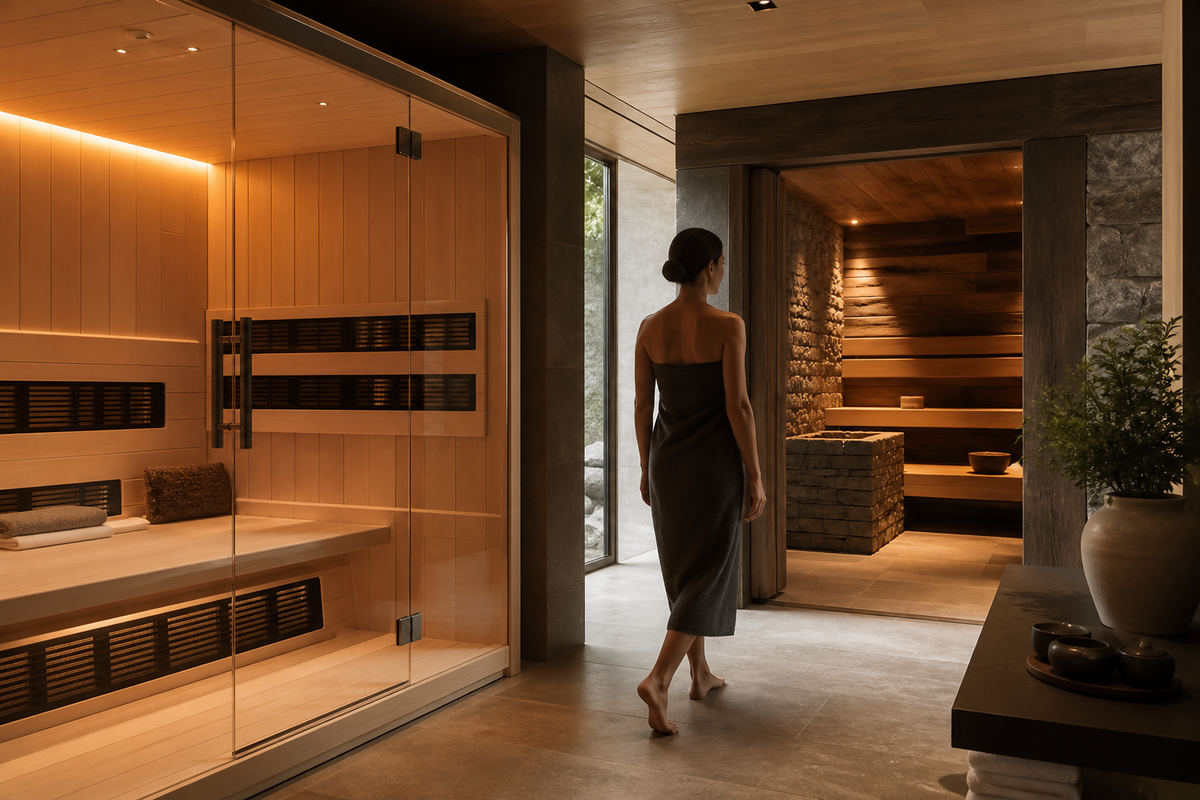
An infrared sauna uses infrared panels positioned around the cabin. These panels emit radiant heat that warms the body and surrounding surfaces while gradually increasing the temperature inside the cabin.
A traditional sauna uses a heater to warm the air inside the room. Many traditional systems also use heated stones, creating the familiar high-temperature sauna environment.
Both provide a warm, enclosed space, but the way that heat feels can be noticeably different.
What Does an Infrared Sauna Feel Like?
Infrared saunas are generally designed to operate with a lower cabin-air temperature than traditional saunas.
Because radiant heat is directed towards the body, the experience can feel more gradual and controlled while still creating a distinctly warm environment.
Infrared cabins are normally used as dry spaces and often include straightforward controls for temperature and session time.
For people who prefer a self-contained cabin and a more moderate-feeling heat environment, infrared can be an appealing option.
What Does a Traditional Sauna Feel Like?
Traditional saunas typically operate with hotter room temperatures because the heater warms the air throughout the space.
Depending on the design, water can also be added to heated sauna stones to temporarily increase humidity and create a burst of steam.
This produces the intense heat and traditional sauna atmosphere that many people associate with the experience.
Neither format is inherently better. The right choice comes down to the type of heat and environment you prefer.
Temperature and Control
Infrared and traditional saunas are commonly designed around different operating temperatures, but exact ranges vary considerably between models.
When comparing products, check the specifications for:
- Maximum operating temperature
- Temperature controls
- Timer settings
- Warm-up guidance
- Heating system
- Recommended operating instructions
Always use the specifications and manual supplied with the exact sauna you are considering rather than relying on a general temperature range.
Space and Installation
Whichever style you choose, the installation requirements should be considered before ordering.
Start by checking:
- External width, depth and height
- Required clearances
- Door opening
- Delivery and assembly route
- Floor suitability
- Electrical requirements
- Ventilation guidance
- Space required for assembly
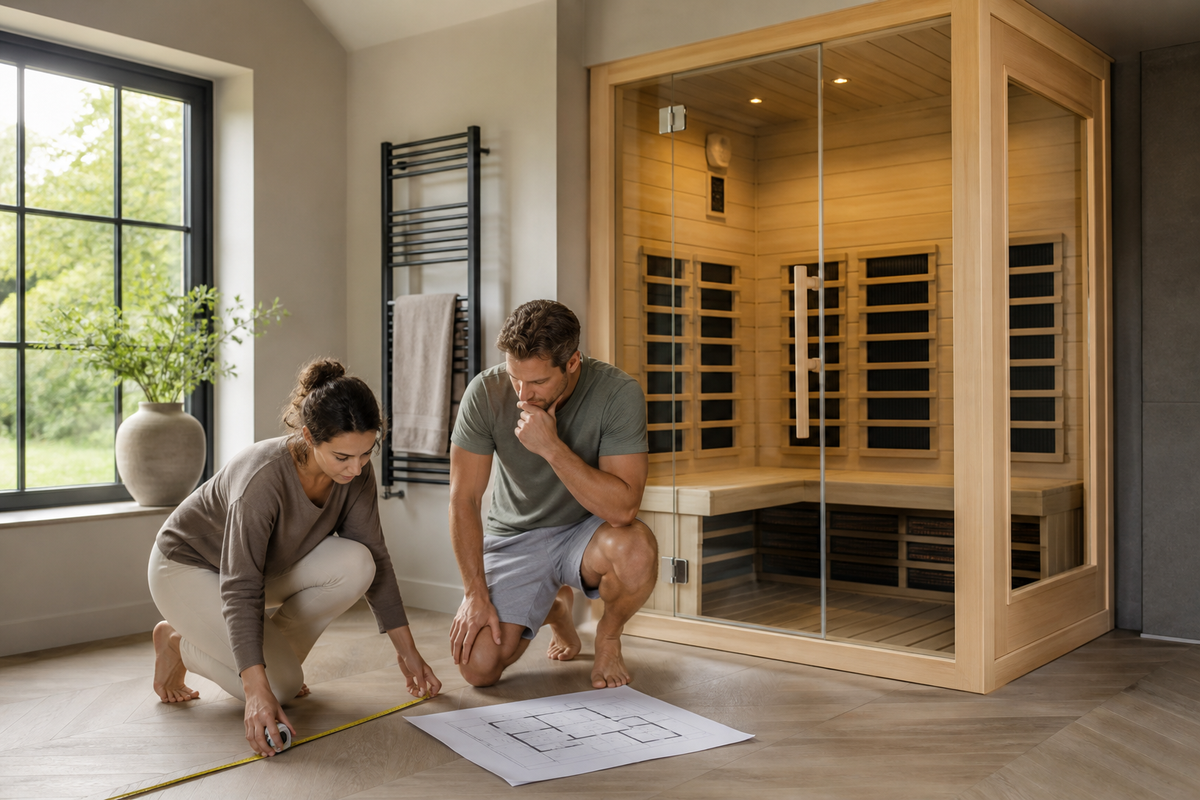
Measure the intended location carefully and make sure the delivery route can accommodate the packaged components.
Electrical requirements also vary between models. Check the stated voltage, frequency, power rating and connection method for the exact sauna, and seek advice from a qualified electrician where necessary.
Which Sauna Is Right for You?
The choice ultimately comes down to the experience you want.
An infrared sauna may suit you if you prefer:
- Direct radiant warmth
- A generally lower cabin-air temperature
- A dry sauna environment
- Straightforward personal temperature and timer controls
- A self-contained cabin for home use
A traditional sauna may suit you if you prefer:
- Higher room temperatures
- The feel of heated sauna air
- Traditional sauna stones
- The option to introduce additional humidity
- A more classic sauna experience
Your available space, installation requirements and preferred style of heat should all form part of the decision.
Choosing a Sauna for Your Home
There is no single sauna format that will suit everyone.
Consider how you want the space to feel, how often you expect to use it and how much room you have available. Once you have decided which type of heat experience you prefer, compare the exact dimensions and specifications of the models you are considering.
If you're exploring the Caldrune infrared sauna range, check the individual product specifications carefully before ordering to make sure the size, capacity and installation requirements suit your home.
This guide is intended as a practical product comparison and does not constitute medical advice. Always follow the instructions supplied with your specific sauna and seek appropriate professional advice where required.

Leave a comment
This site is protected by hCaptcha and the hCaptcha Privacy Policy and Terms of Service apply.